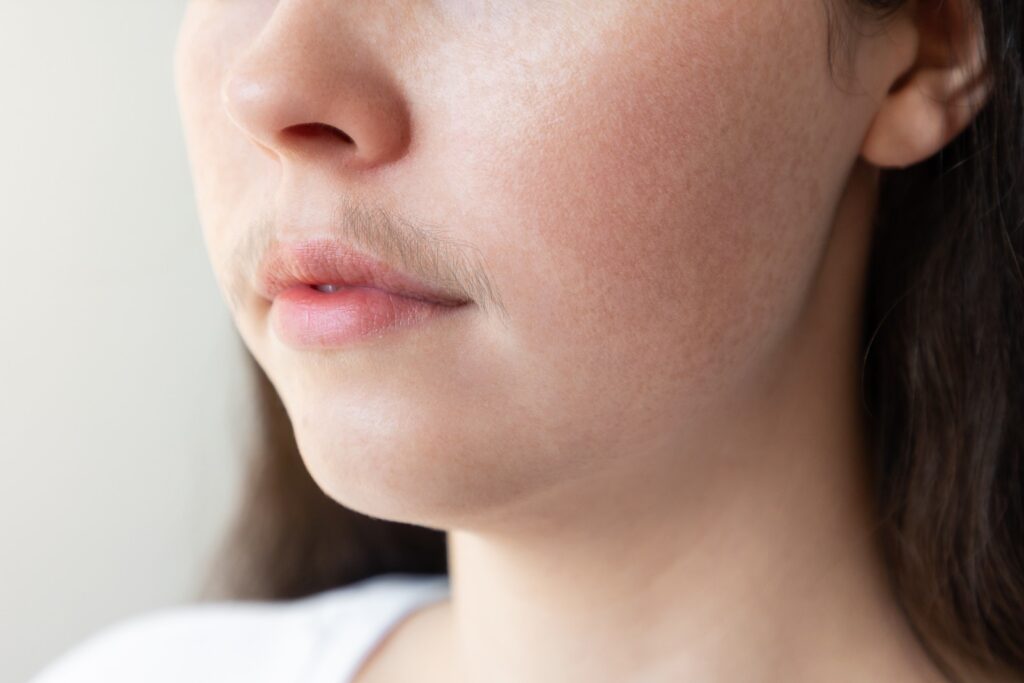
Hirsutism
Hirsutism is the excessive growth of dark or coarse hair in women in areas where men typically grow hair, such as the face, chest, and back. It is often a sign of hormonal imbalance, especially increased androgen levels.
Common Causes
- Polycystic Ovary Syndrome (PCOS): The most common cause of hirsutism in women.
- Hormonal imbalances such as high levels of androgens (male hormones).
- Genetic factors (family history of hirsutism).
- Medications, such as certain steroids or hormonal drugs.
- Rare endocrine disorders like Cushing’s syndrome or adrenal gland tumors.
Common Symptoms
- Excessive hair growth on face, chest, back, and abdomen
- Thinning scalp hair (male-pattern baldness)
- Acne or oily skin
- Irregular periods or menstrual disturbances
- Voice deepening or other signs of virilization in severe cases
Evaluation & Diagnosis
- Medical history and family history assessment
- Physical examination to determine hair pattern
- Blood tests to check hormone levels (testosterone, DHEAS, LH, FSH)
- Ultrasound of ovaries to detect PCOS
- Further tests if adrenal or other endocrine disorders are suspected
Treatment & Management
- Lifestyle modifications: Weight management, healthy diet, and exercise
- Medications to reduce androgen levels (e.g., oral contraceptives, anti-androgens)
- Hair removal methods: Laser, waxing, or electrolysis for cosmetic management
- Addressing underlying conditions like PCOS or hormonal disorders
- Regular follow-up with a specialist for monitoring hormone levels and symptoms
With proper evaluation and management, hirsutism can be effectively controlled. Dr. Vipin Singhal provides expert care for hormonal disorders in women, focusing on accurate diagnosis, treatment, and long-term management.